

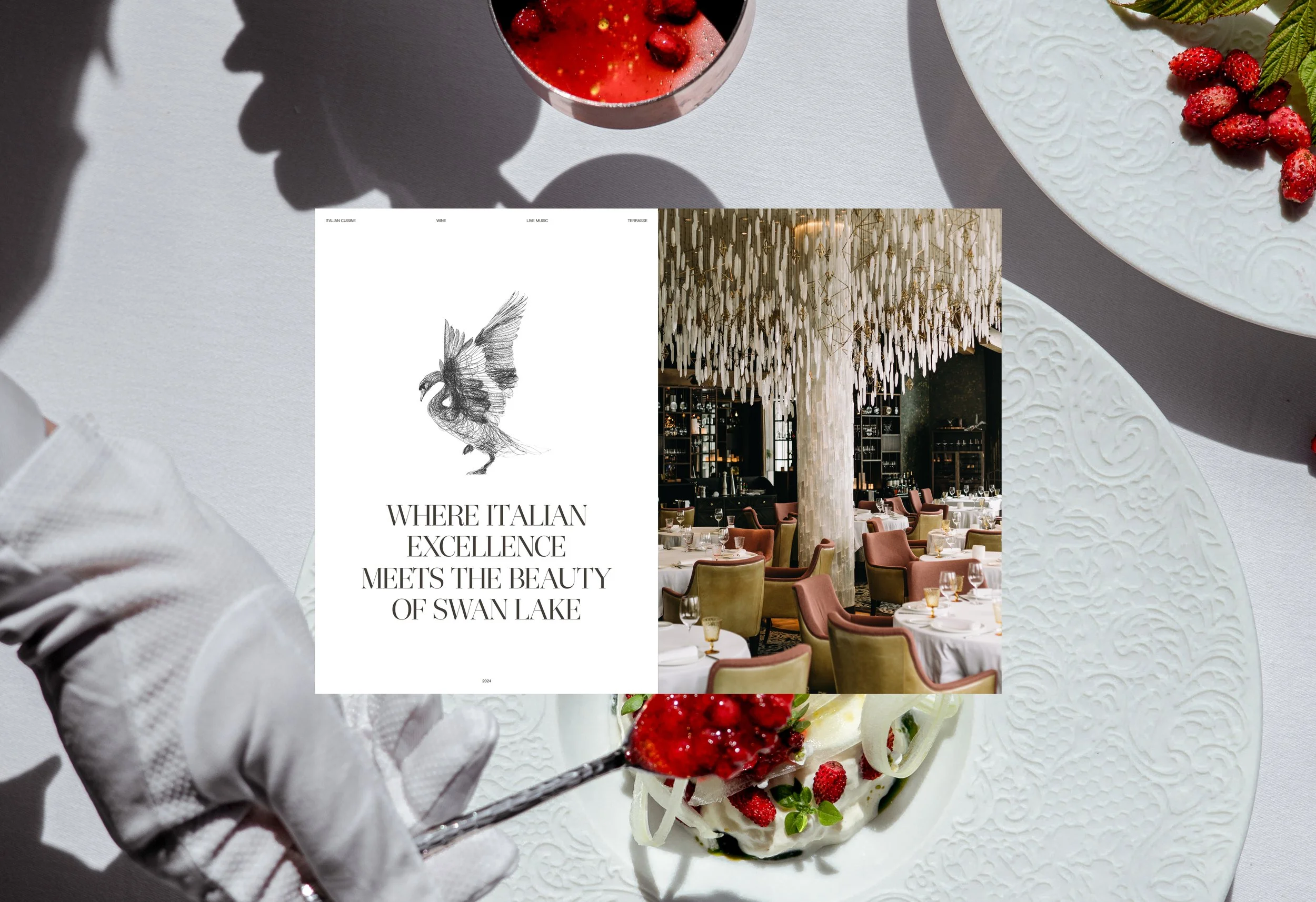
Il Lago dei Cigni
Overview
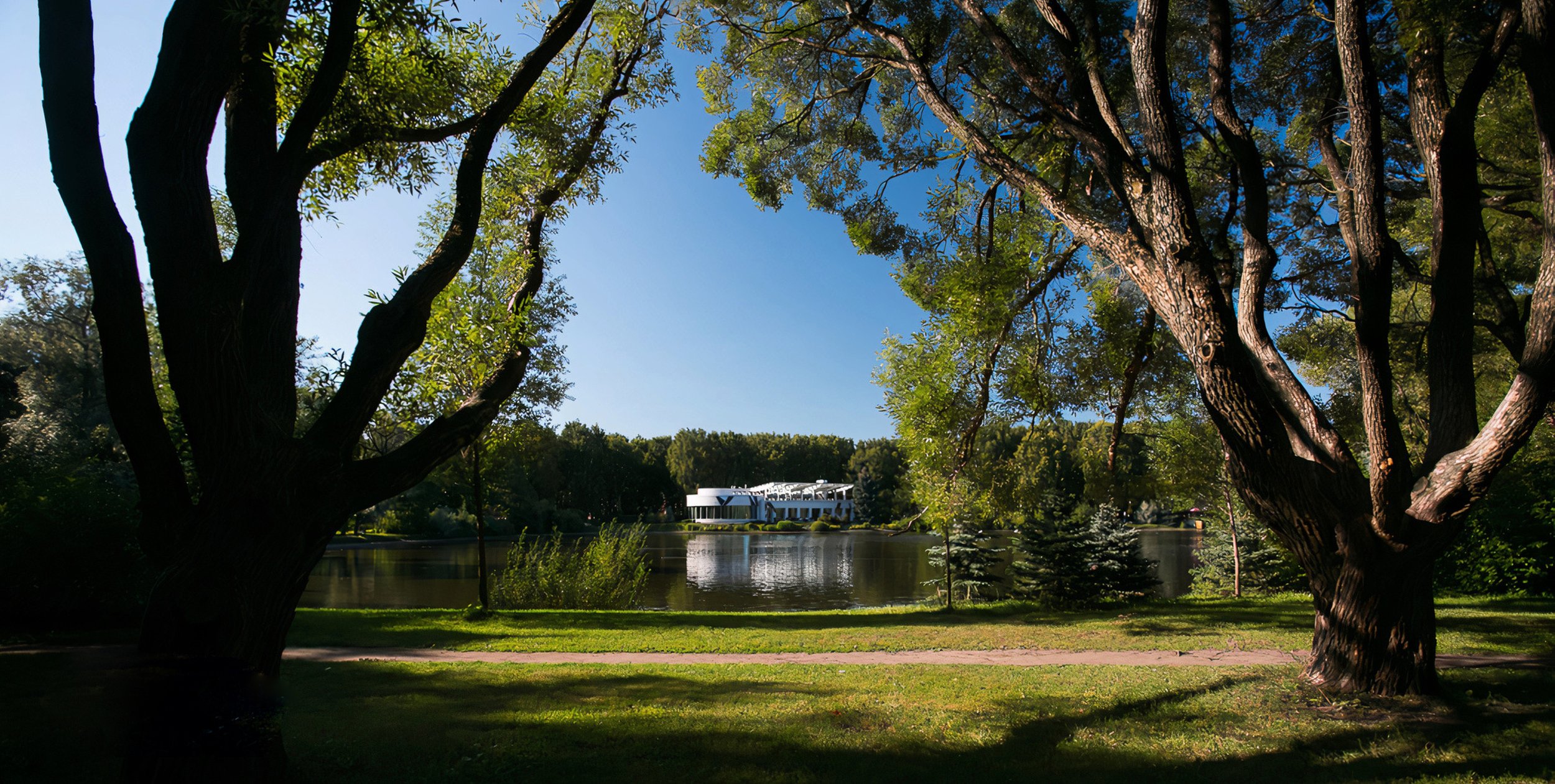
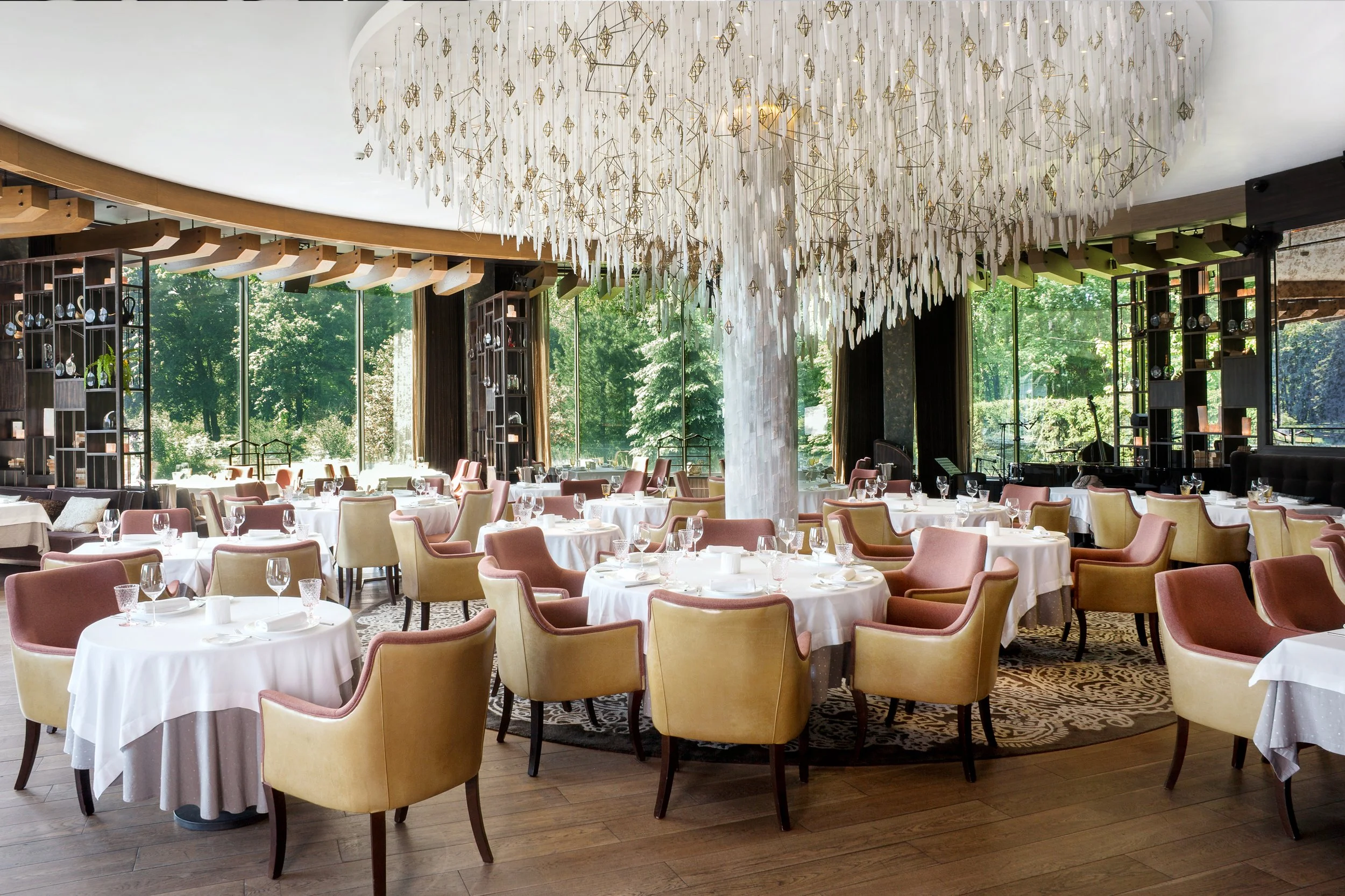
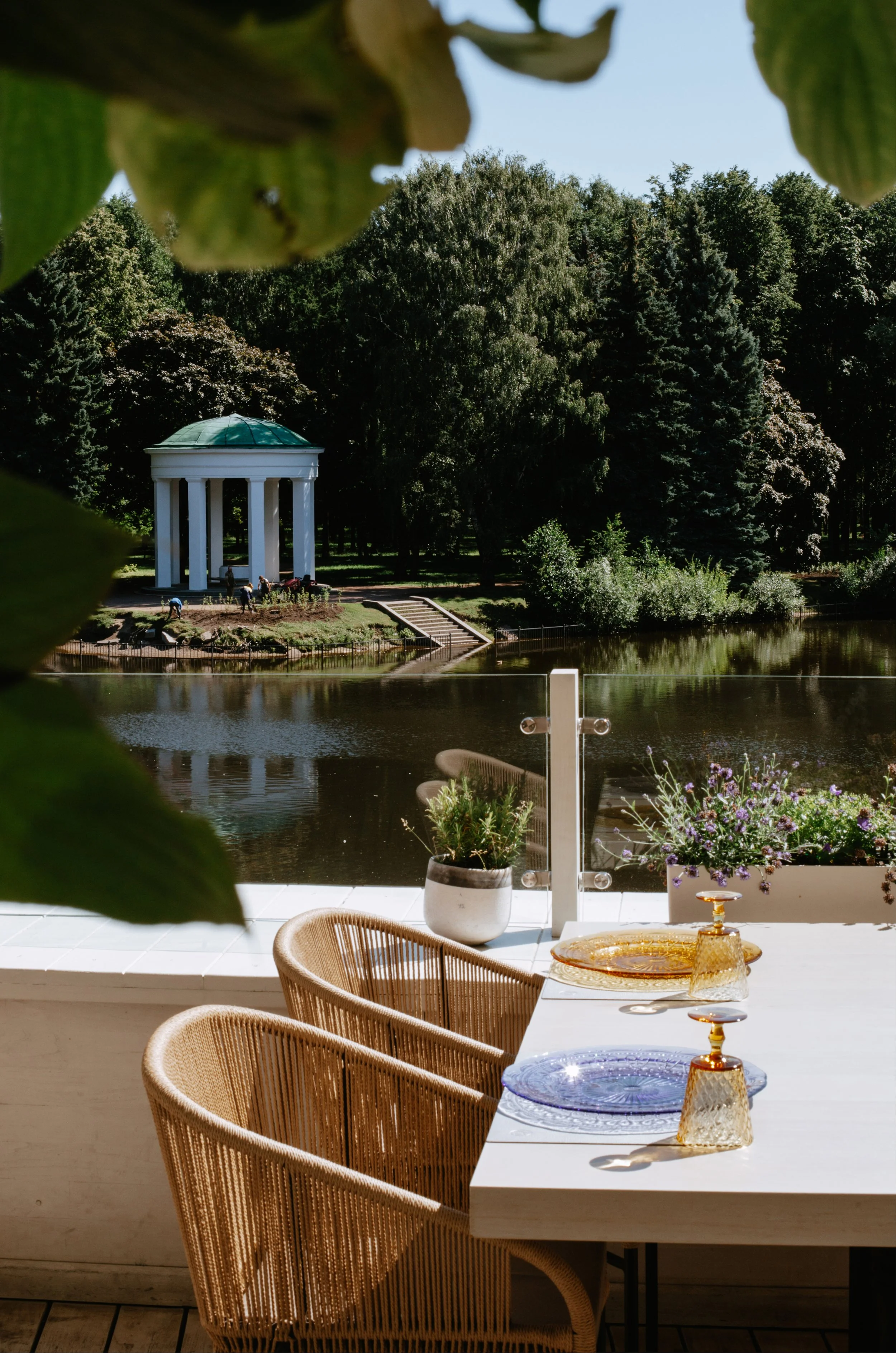
Il Lago dei Cigni is a premium Italian fine dining restaurant located on Krestovsky Island in Saint Petersburg, on the shore of Swan Lake. The restaurant combines Italian gastronomy, a natural lakeside setting, panoramic interiors, a rooftop terrace, and a high level of service.
The project focused on creating a new digital presence for the restaurant: a website that could communicate its philosophy, atmosphere, interiors, menu, location, and make table reservation simple and fast. In addition to the website, I worked on the brand communication system, refreshed visual identity elements, and developed new positioning solutions to strengthen the restaurant’s premium image online.
The challenge was to translate the restaurant’s established reputation into a digital experience that felt equally elegant, trustworthy, and convenient. The website had to work both for loyal guests who already knew Il Lago and for new visitors discovering the restaurant online for the first time.
Client
Il Lago dei Cigni
Restaurant Scale & Recognition
Restaurants / Premium Hospitality
Industry
UX/UI Design
Analytics
Brand Identity
Print / POS Materials
Visual Communications
Advertising Materials
Role
The restaurant’s public recognition became an important part of the project context. In 2023, Il Lago dei Cigni received three lemons in Lemon Guide 2023; during the ceremony, the restaurant team also noted that the venue had been open for 10 years and that 26 team members had worked there since the beginning.
In 2024, Il Lago dei Cigni took first place in Lemon Guide for the third year in a row. Experts praised the restaurant for its food, location, interior, service, and parking, which confirmed that the brand’s strength was not only gastronomy, but the complete guest experience around it.
In 2025, Il Lago dei Cigni remained among the strongest restaurants in the city, taking second place in Lemon Guide. The 2025 Lemon Guide context also shows the scale of the competitive field: 266 restaurants in the long list, 33 winners, 100 experts, and 7 special prizes.
90 seats in the main hall
2 VIP rooms
60 seats on the rooftop summer terrace
150 total guest capacity across the main hall and terrace
10+ years of restaurant history
Michelin Star candidate
2023 Lemon Guide winner
2024 Lemon Guide 1st place
2025 Lemon Guide 2nd place
3 consecutive Lemon Guide gold results before 2025
These metrics shaped the design challenge: the website had to communicate not only the restaurant’s menu, but the full premium experience around Il Lago — its atmosphere, location, interiors, service, reputation, and reasons to make a reservation.
Business Context
The restaurant already had a strong offline reputation, loyal guests, a premium interior, recognizable location, and high service standards. However, the digital experience needed to reflect the same level of quality. For a premium restaurant, the website is not just an informational page — it is often the first point of contact before a guest makes a reservation.
The previous digital presence did not fully communicate the restaurant’s atmosphere, philosophy, menu, awards, interiors, and location as one coherent premium experience. This created a gap between the restaurant’s real-world value and how easily new guests could understand that value online.
The business task was to make the restaurant easier to discover, easier to understand, and easier to book. The website had to support trust among existing guests, introduce the restaurant to new audiences, and strengthen Il Lago’s position in a competitive premium hospitality market.
Objective
My task was to create a website and visual communication system that could present Il Lago dei Cigni as a complete premium hospitality experience. The site needed to communicate the restaurant’s positioning, philosophy, cuisine, interiors, location, terrace, banquet opportunities, team, and reservation options in a clear and elegant way.
The goal was not only to redesign the interface, but to build a digital journey that would help guests move from interest to reservation. The website had to answer key questions quickly: what kind of restaurant is this, why is it special, what does the atmosphere look like, what can I order, where is it located, and how can I book a table.
The final solution had to combine premium aesthetics with practical usability: emotional enough to create desire, structured enough to support decision-making, and simple enough to make booking a table feel effortless.
Research Approach
The research stage focused on understanding how different audiences choose premium restaurants and what information they need before making a reservation. I looked at the guest journey not as a single click on a booking button, but as a sequence of trust-building steps: discovery, first impression, menu exploration, atmosphere evaluation, location check, and reservation.
The research combined several directions: audience analysis, competitor and market review, website UX analysis, content audit, and evaluation of guest expectations around premium dining. The goal was to understand how the restaurant’s offline strengths could be translated into digital touchpoints.
The key question was: how can a website make a well-known premium restaurant feel both exclusive and easy to approach?
Audience Research
The audience research focused on two main groups: loyal guests and new guests. Loyal guests already trusted the restaurant, but needed a faster way to check updates, menus, events, seasonal offers, and booking options. New guests needed more context: atmosphere, cuisine, location, service level, awards, and reasons to choose Il Lago over other premium restaurants.
The research showed that the website had to solve different tasks for different types of visitors. Some users come with a clear intent to book a table. Others compare restaurants for a special occasion, business dinner, romantic evening, family event, or private celebration. For them, the website has to build confidence before the reservation step.
This shaped the website logic: the experience had to combine emotional storytelling with practical information. Beautiful imagery alone was not enough; the site needed clear navigation, visible booking entry points, menu access, location details, and a structure that would make the restaurant easy to evaluate.
Research Findings
Trust is already high among loyal guests
Existing guests know the restaurant and trust its reputation, but the website needed to make repeat interactions faster: menu updates, contact details, location, reservation, events, and seasonal information.
New guests need a complete first impression
For people discovering Il Lago online, the site had to communicate the restaurant’s philosophy, interiors, cuisine, service level, and location before asking them to book.
Premium does not mean complicated
The booking experience had to feel refined, but not heavy. A premium restaurant website should reduce friction, not add ceremony to simple actions.
Atmosphere is part of the product
The restaurant’s lakeside location, park surroundings, terrace, interior materials, panoramic windows, and overall feeling of calm are not background details — they are key decision-making factors.
The menu is a conversion tool
For fine dining, the menu is not only information. It helps guests understand quality, cuisine direction, price expectations, and whether the restaurant fits the occasion.
The website must support both emotion and action
The design had to inspire desire, but also help users quickly complete practical tasks: view menu, check location, call, and reserve a table.
Product Strategy
The product strategy was built around turning the website into a premium digital hospitality touchpoint. The site had to work like a carefully structured guest journey: first creating atmosphere, then explaining the restaurant, then helping users explore the menu and interiors, and finally leading them to reservation.
Instead of treating the website as a brochure, I approached it as a service interface. Each section had a role in the decision-making process: the hero screen created a first impression, the restaurant story explained positioning, interior photography built emotional trust, the menu section supported evaluation, the location block reduced uncertainty, and the booking CTA moved the user toward action.
This allowed the website to become both a brand experience and a conversion tool.
Positioning
The updated positioning focused on Il Lago dei Cigni as a premium restaurant where gastronomy, nature, interior design, and service exist as one complete experience. The restaurant is not defined only by Italian cuisine, but by the atmosphere around it: Swan Lake, the park, panoramic views, elegant interiors, terrace, and a sense of calm away from the city rhythm.
The communication had to avoid generic luxury clichés. Instead of simply saying “premium” or “exclusive,” the website had to show why the restaurant feels special: through photography, typography, pacing, content hierarchy, menu presentation, and subtle visual details.
The final direction positioned Il Lago as a destination for special occasions, romantic dinners, business meetings, family lunches, private events, and guests looking for a refined Italian restaurant experience in a unique natural setting.
Brand Identity Refresh
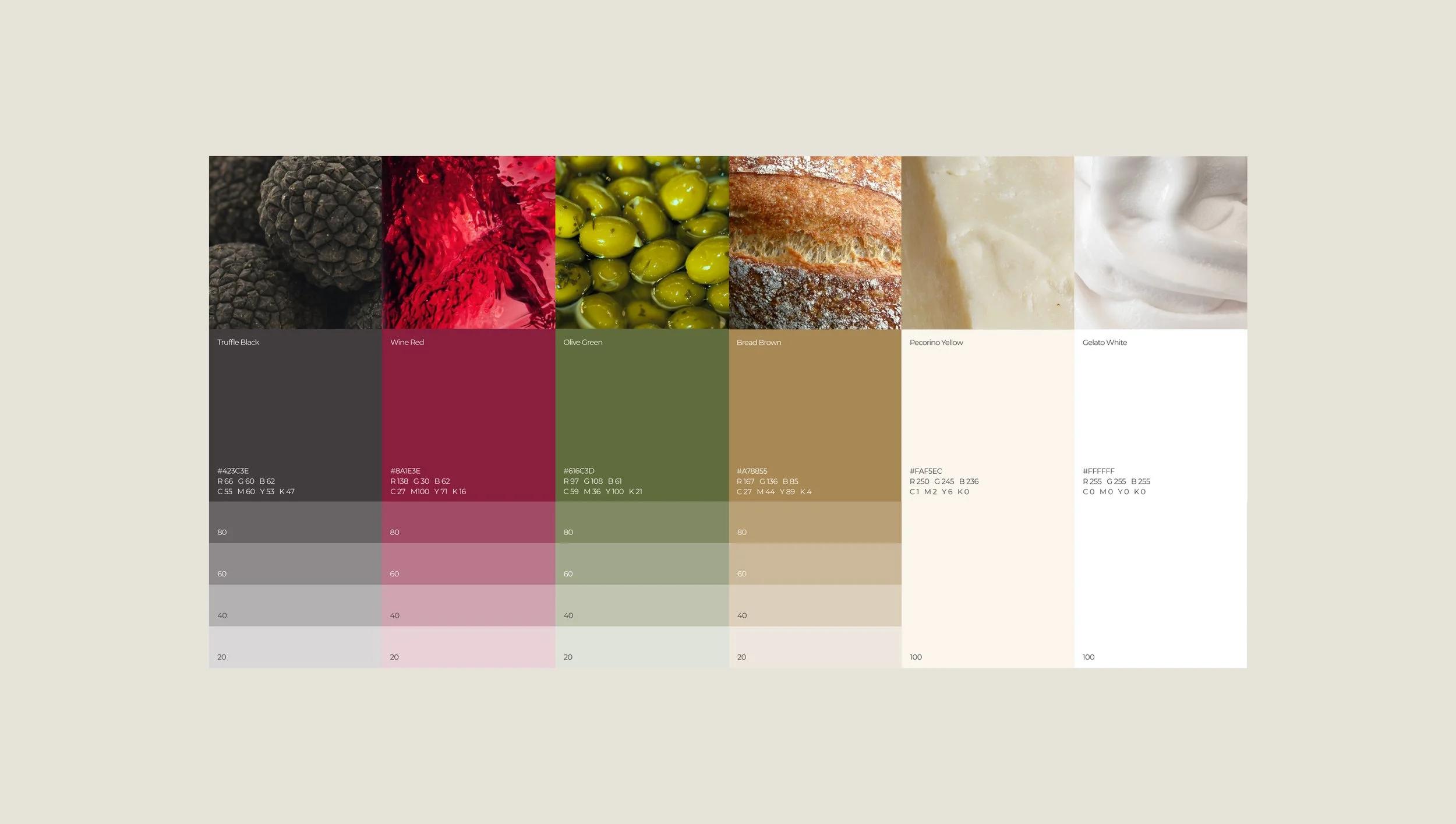
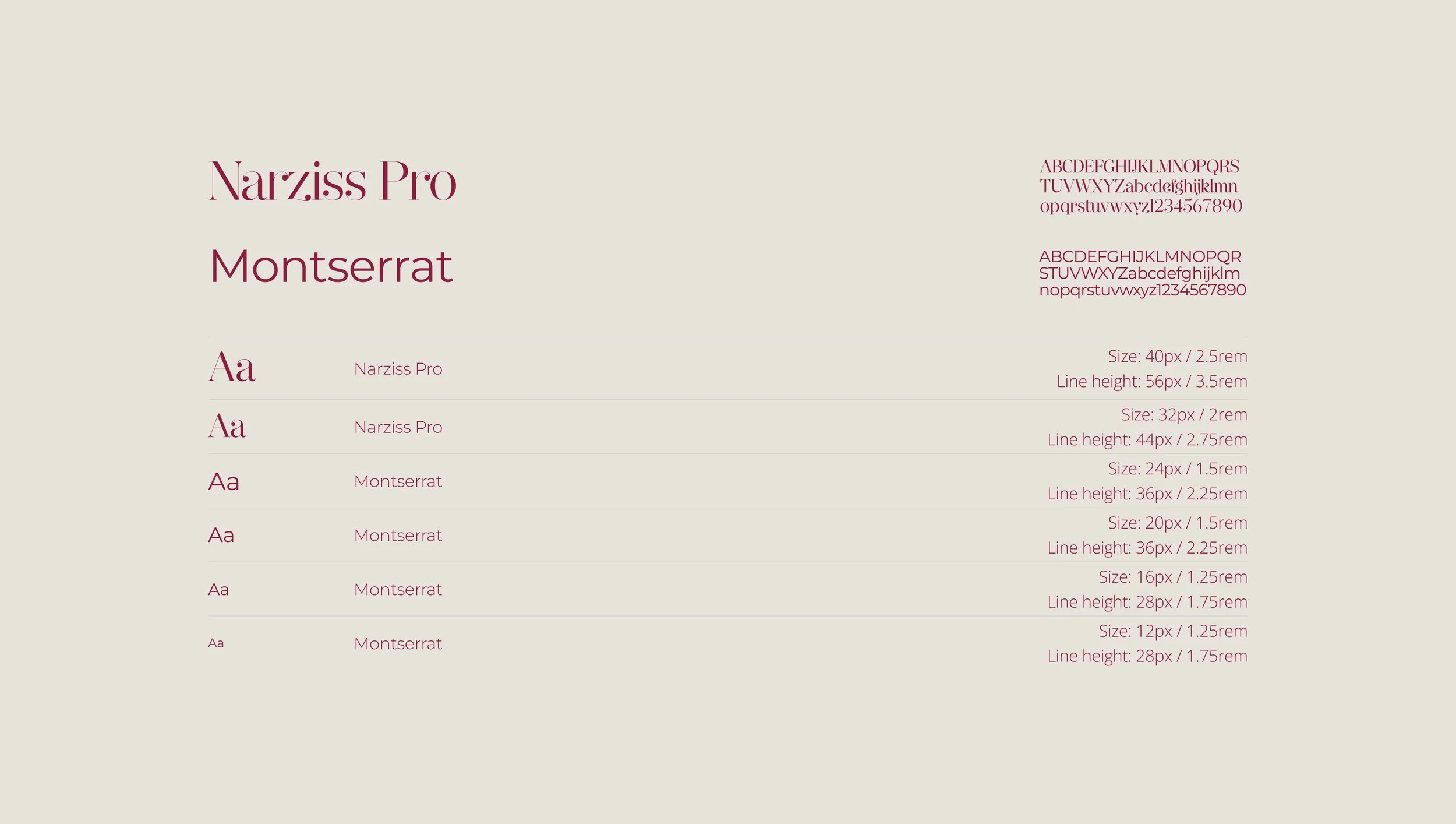
The brand refresh focused on making Il Lago’s visual communication more consistent, premium, and adaptable for digital use. The goal was not to destroy the existing identity, but to refine it and make it work better across the website, advertising materials, menus, and other guest-facing touchpoints.
I worked with typography, spacing, image direction, layout principles, color balance, and the overall tone of communication. The visual language became calmer, more refined, and more editorial, helping the restaurant feel closer to contemporary premium hospitality rather than a traditional static restaurant brand.
This update helped create a more coherent brand experience: the website, menu materials, advertising communication, and digital presence began to speak in one visual language.
Visual System
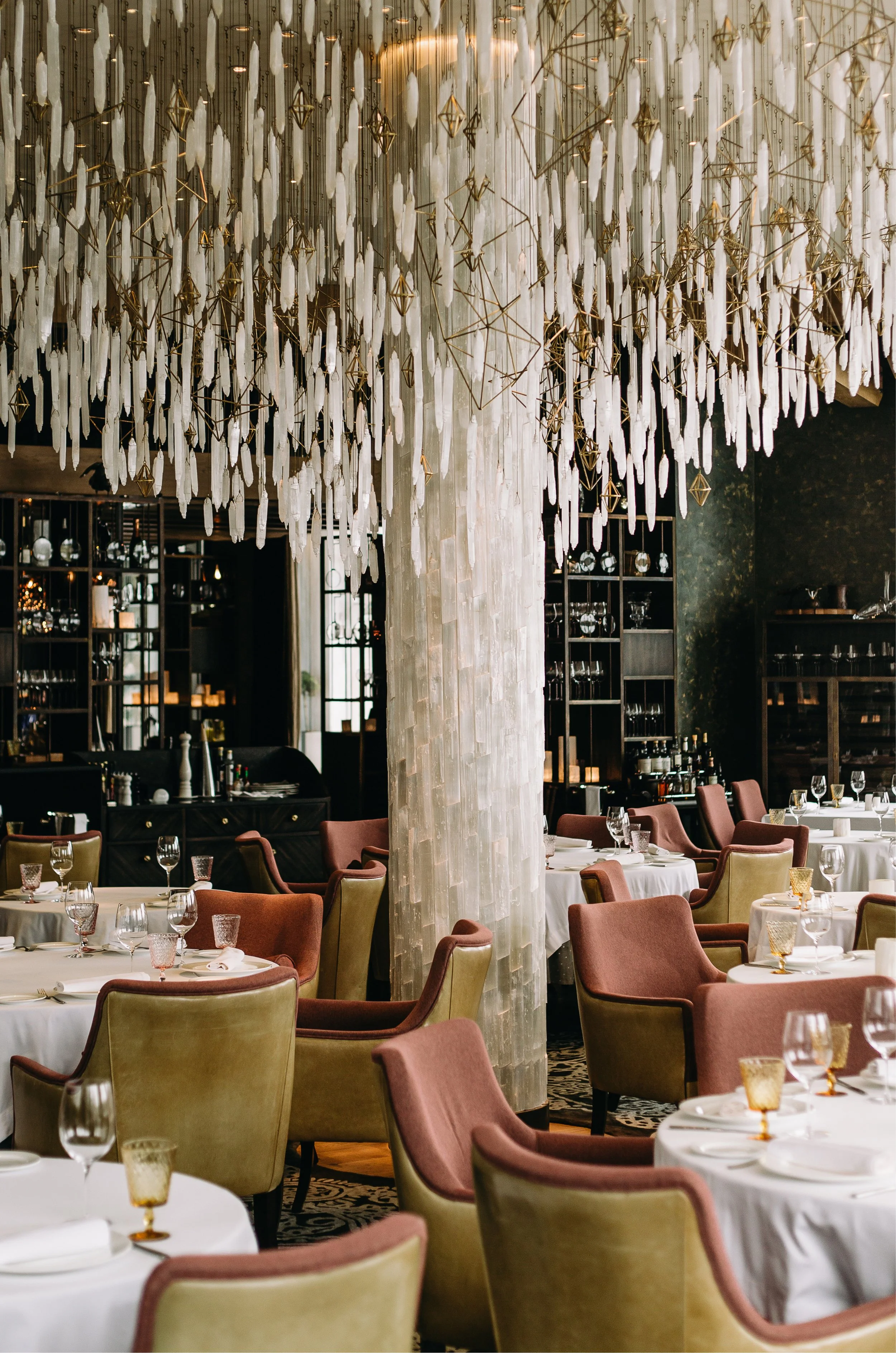
The visual system was built around restraint, detail, and atmosphere. Large photography, clean typography, generous spacing, elegant contrast, and a calm color palette helped communicate the premium character of the restaurant without overloading the interface.
The design needed to feel expensive, but not loud. The restaurant’s value comes from its environment, cuisine, service, and subtle details, so the visual system had to support those qualities rather than compete with them.
The website used imagery as a central storytelling tool: interiors, dishes, terrace, natural surroundings, details of materials, and the lakeside location worked together to create a complete perception of the restaurant before the guest arrives in person.

Website UX
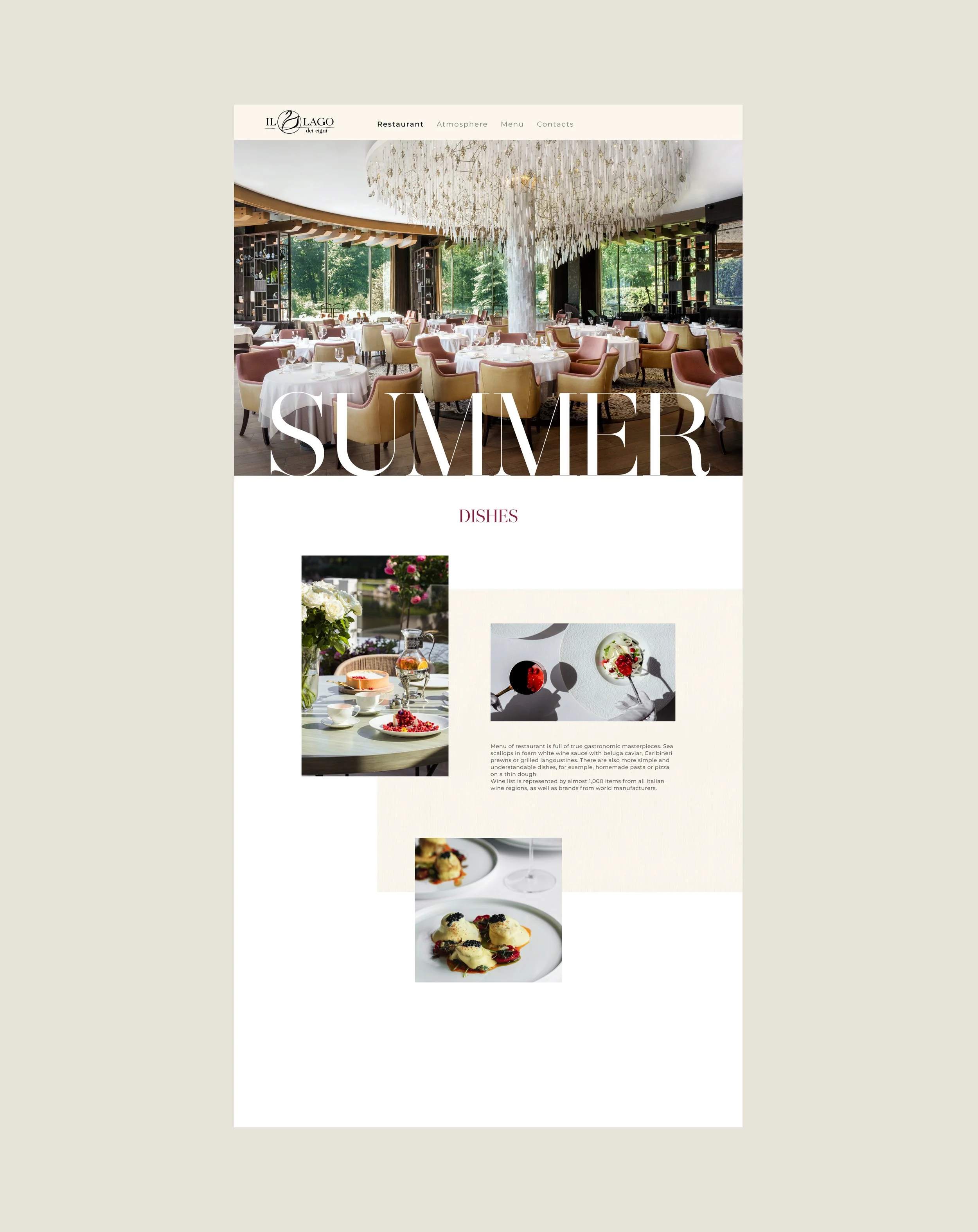
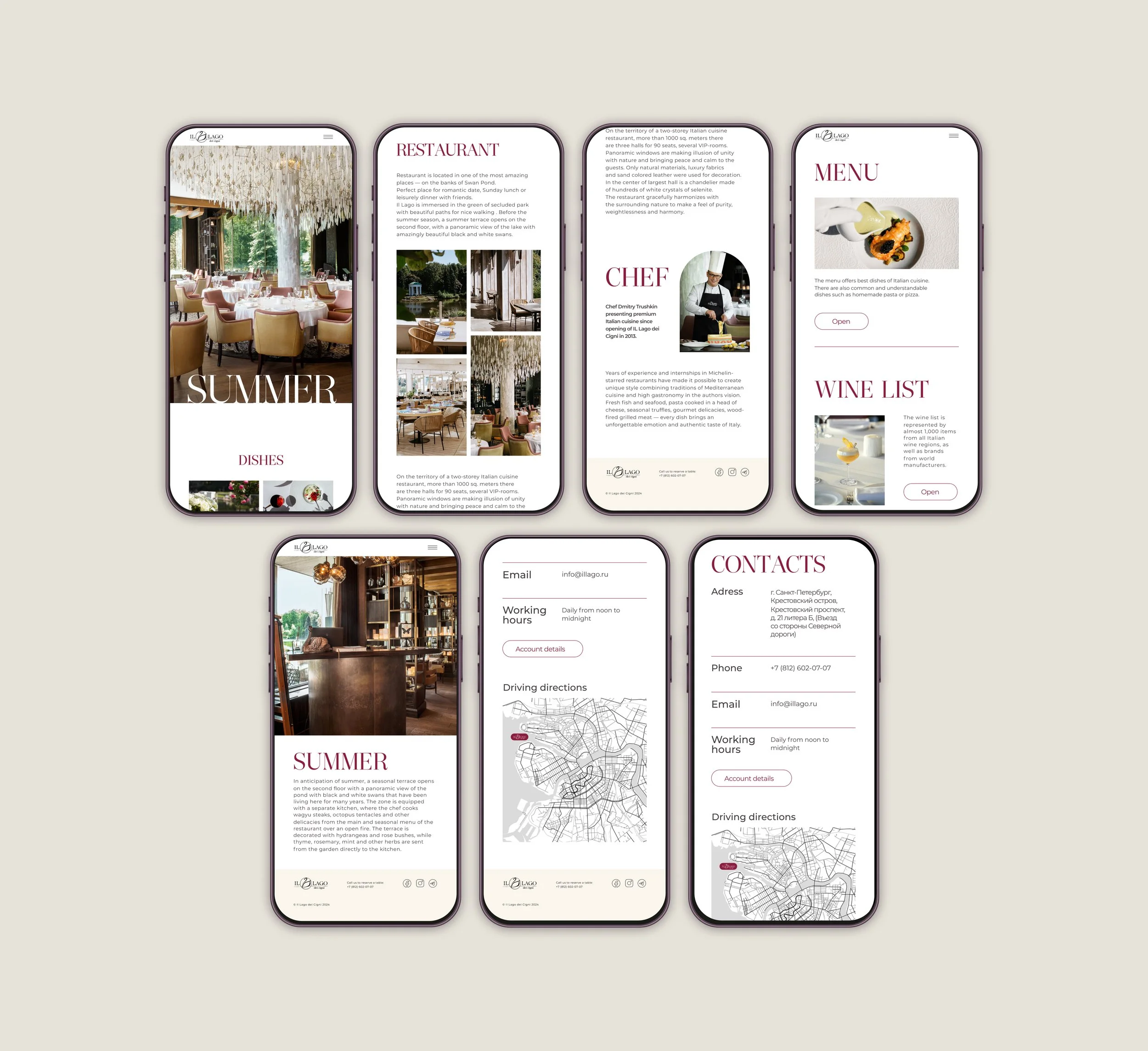
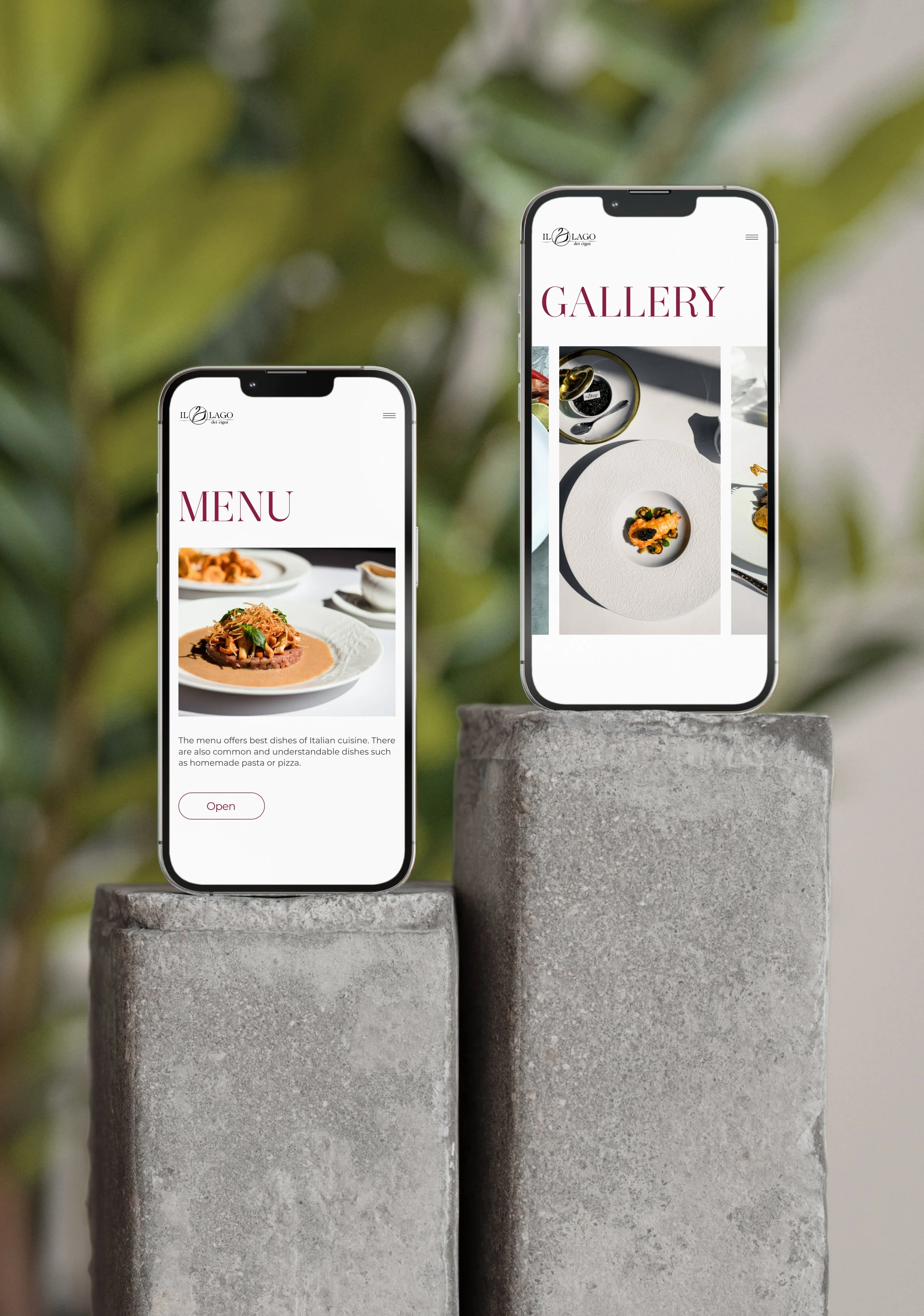
The website was structured around three key sections: Restaurant, Atmosphere, and Menu. This logic reflected the way guests evaluate a premium restaurant before making a reservation: first they need to understand the concept, then feel the atmosphere, and finally explore the menu before taking action.
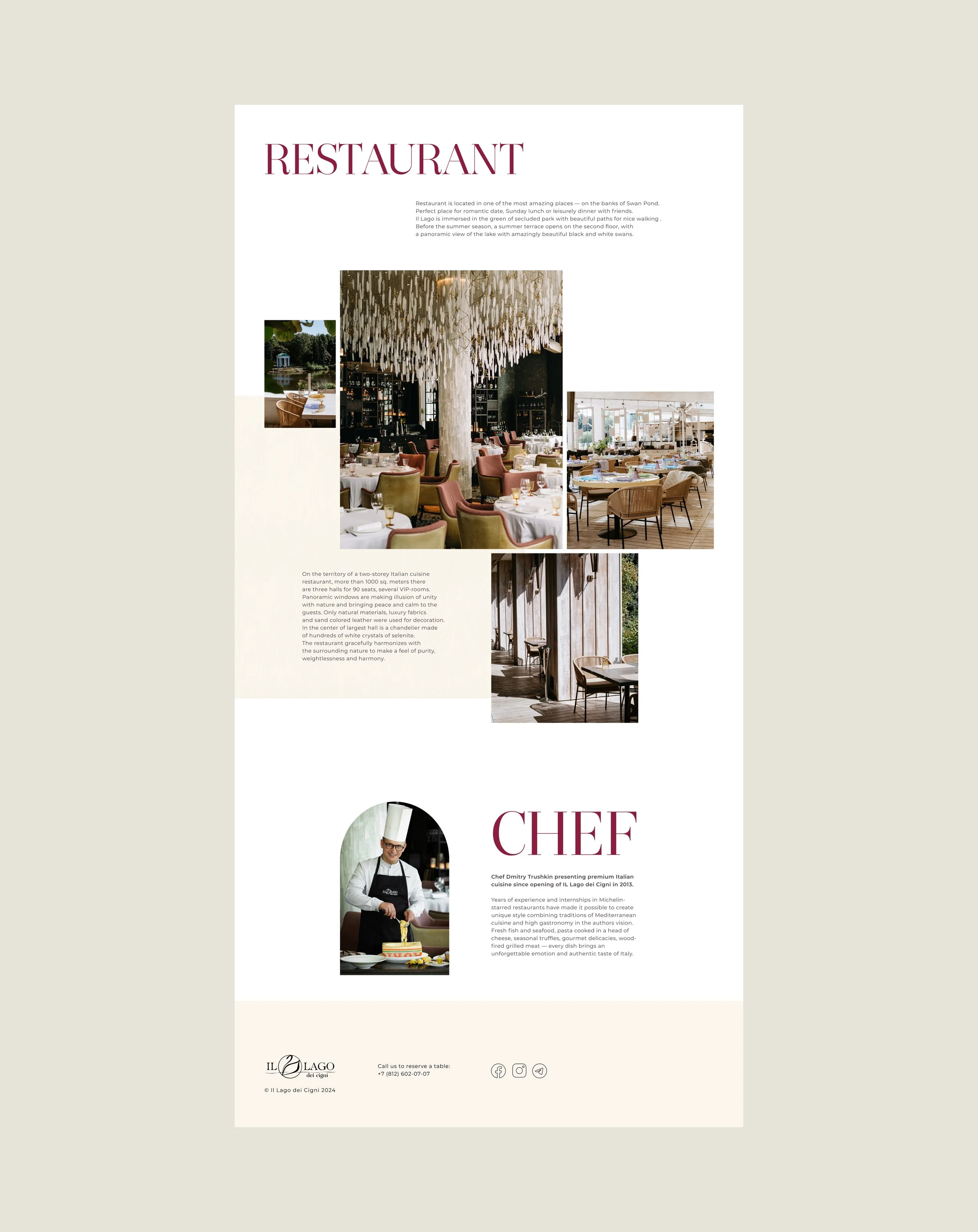
The Restaurant section introduced Il Lago dei Cigni as a premium dining destination. It explained the restaurant’s positioning, philosophy, and character, helping new guests quickly understand what kind of experience they could expect.
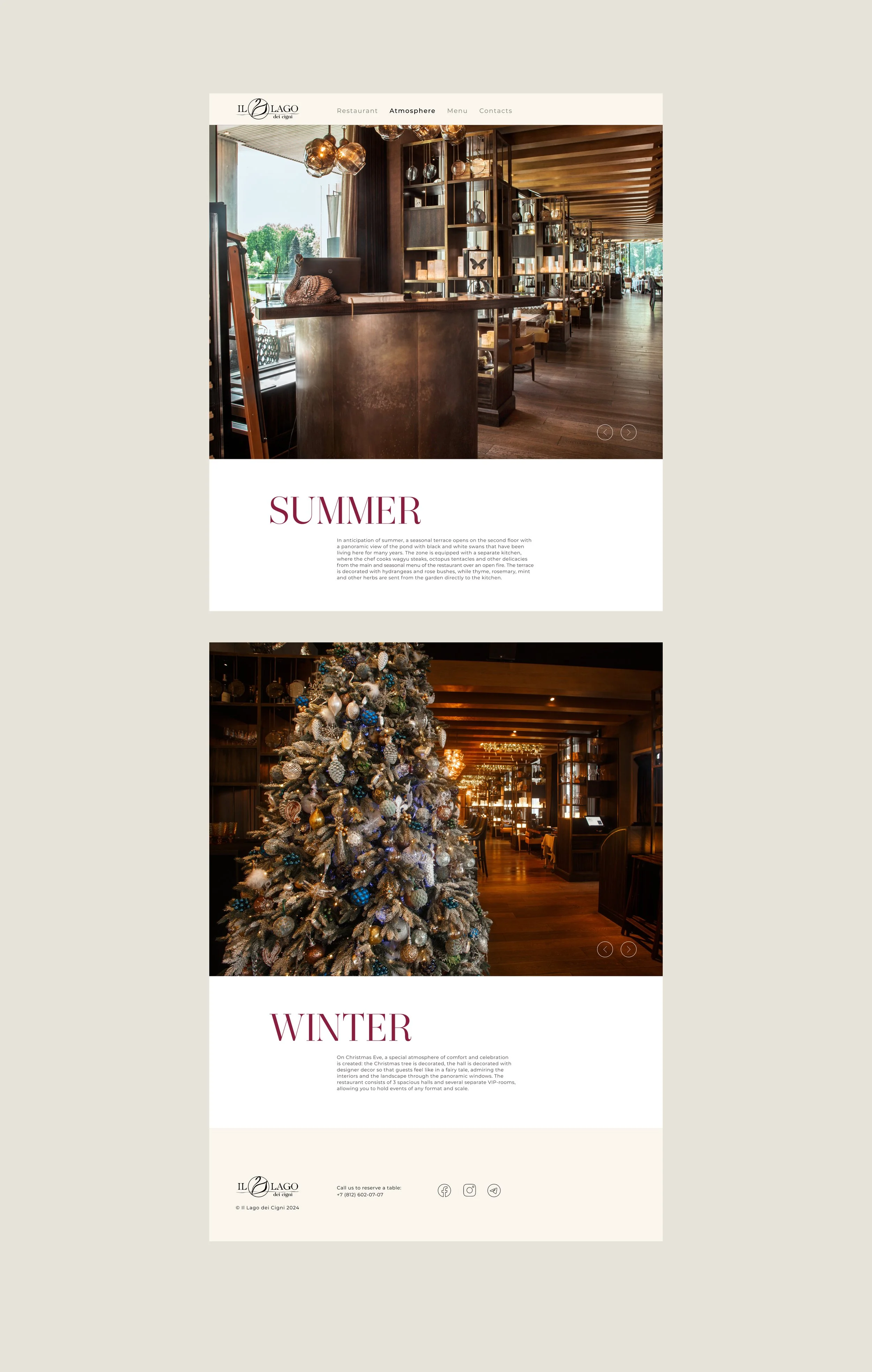
The Atmosphere section focused on the emotional side of the visit: interiors, seasonal mood, details of the space, and the feeling of being inside the restaurant. This section helped translate the offline experience into a digital format and made the website feel more immersive.
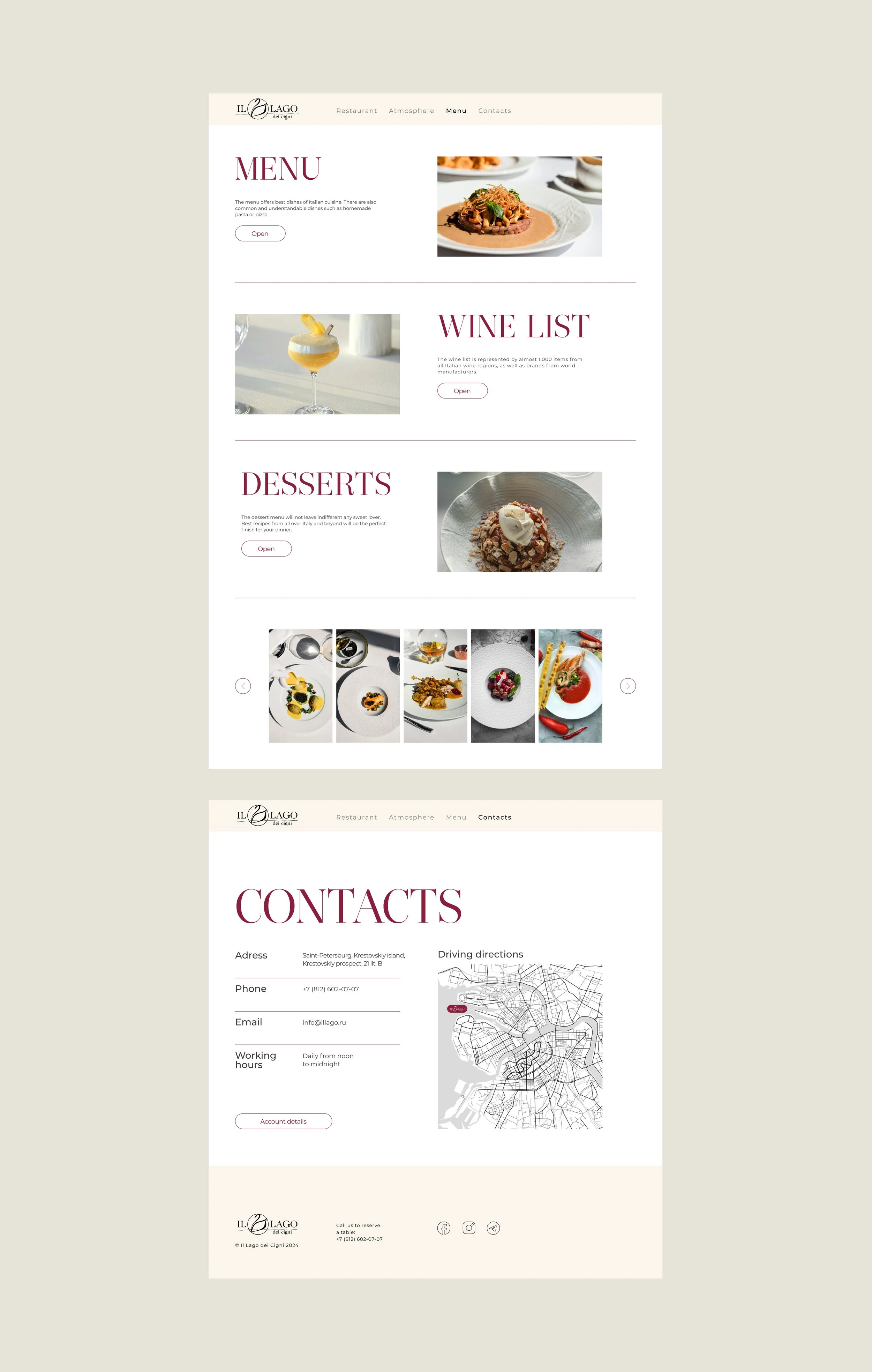
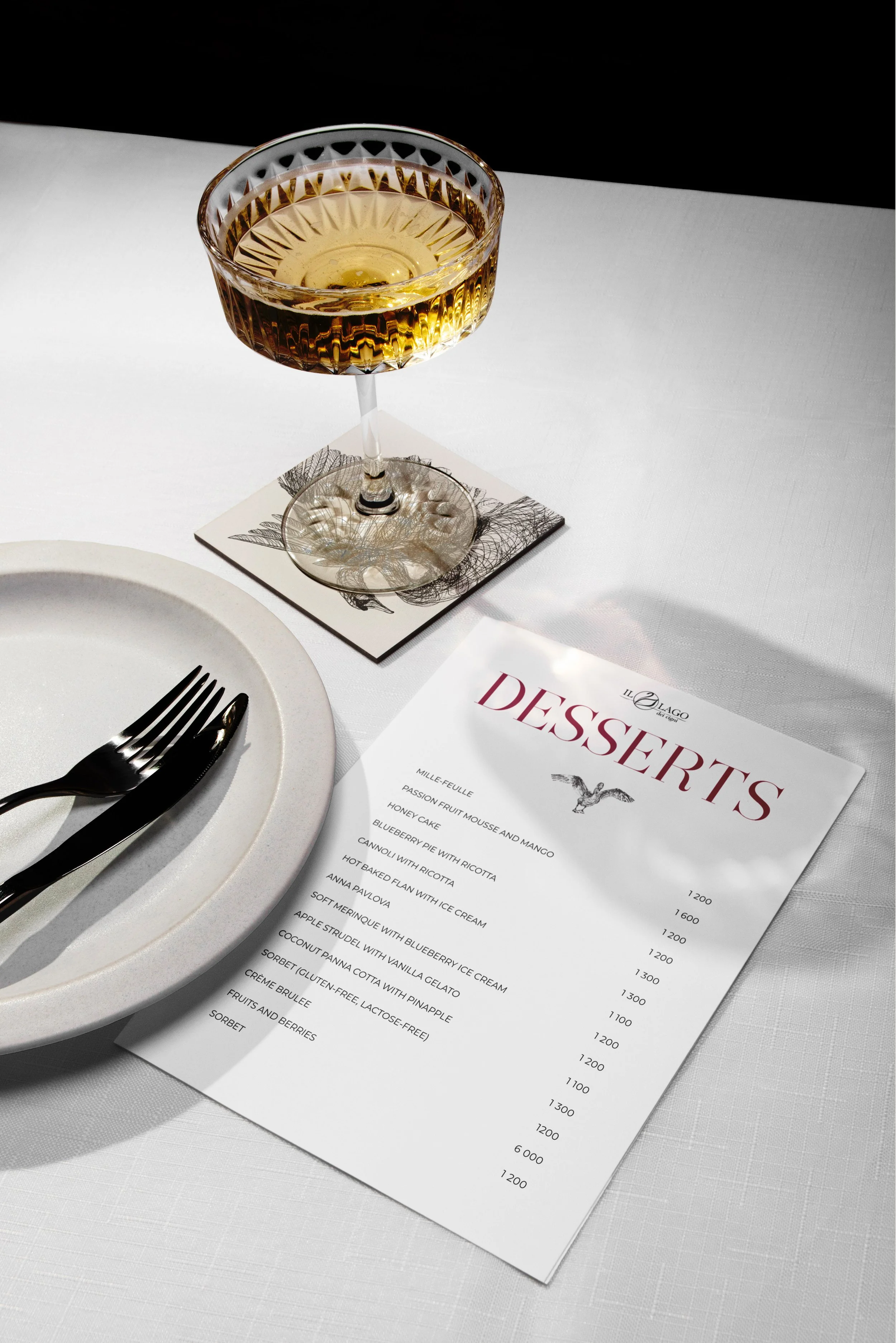
The Menu section worked as the main practical decision-making point. It gave users access to the restaurant’s culinary offer, seasonal menus, wine list, desserts, and special offers, helping them move from interest to reservation with more confidence.
Together, these sections created a clear premium journey: understand the restaurant, feel the atmosphere, explore the menu, and book a table.
Menu & Restaurant Story
The restaurant story was built through the connection between three content layers: Restaurant, Atmosphere, and Menu. Instead of presenting Il Lago dei Cigni only as a place to eat, the website introduced it as a complete hospitality experience — with its own philosophy, visual mood, interiors, cuisine, and sense of occasion.
The Restaurant section gave the brand context. The Atmosphere section created emotional involvement through interior and seasonal visuals. The Menu section made the experience concrete by showing what guests could actually choose, taste, and plan their visit around.
The menu was not treated as a secondary technical page. It became one of the key conversion points of the website: users could explore seasonal offers, restaurant menus, wine, and desserts before deciding to book. This made the website more useful for both new guests and regular visitors.
This structure helped connect storytelling and action. The website did not simply describe the restaurant — it guided users through the same questions they naturally ask before visiting: what is this place, what does it feel like, what can I order, and how do I reserve a table?
Location & Occasion Scenarios
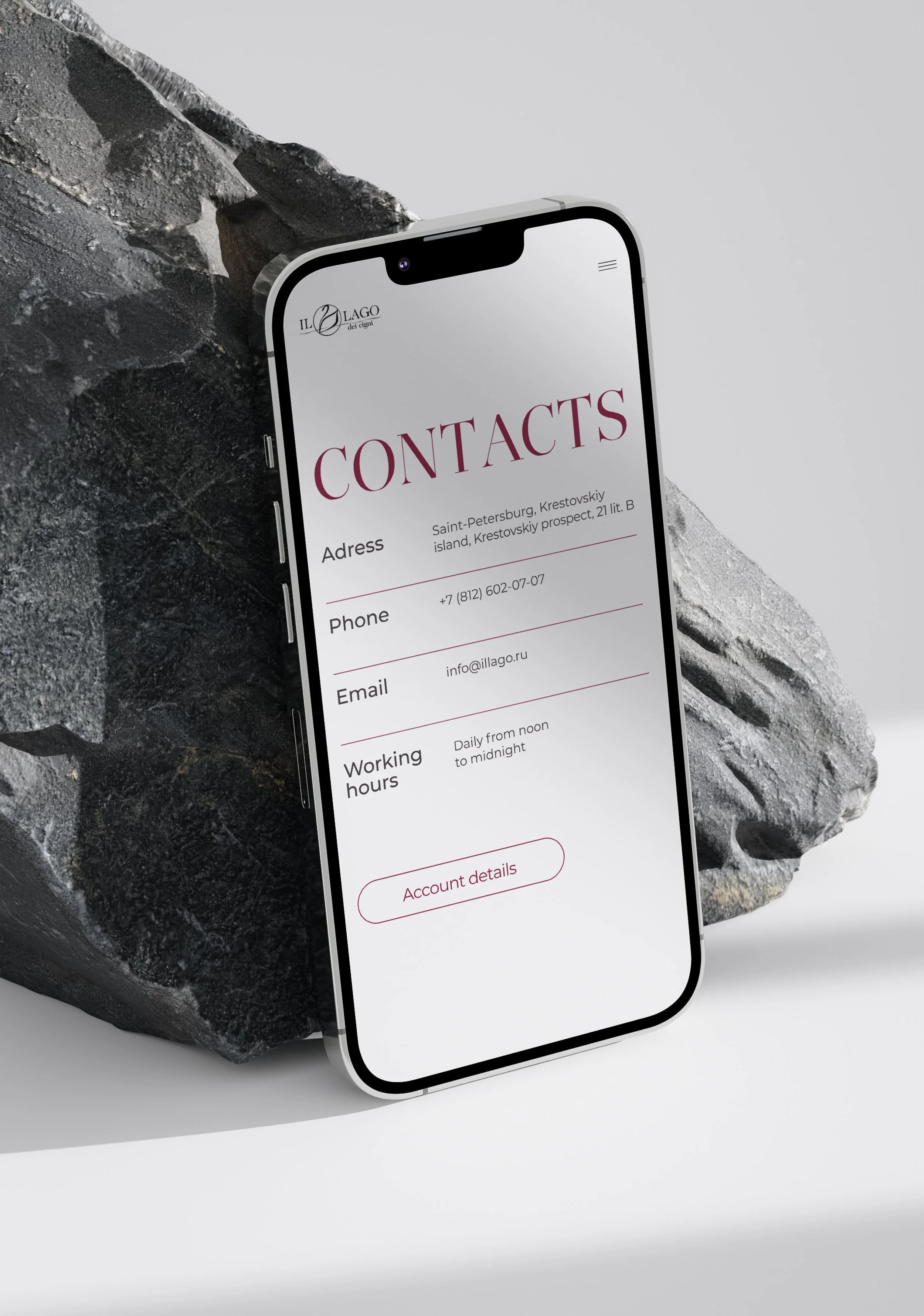
Location became an important part of the product logic. Il Lago is not just “a restaurant in Saint Petersburg”; it is a destination restaurant on Krestovsky Island, connected to nature, the lake, the park, and a quieter premium atmosphere.
The site had to help users understand whether the restaurant fits their occasion: romantic dinner, family lunch, business meeting, weekend visit, terrace evening, banquet, or private event. This is why the website needed separate emphasis on interiors, VIP rooms, terrace, banquets, and contact details.
By presenting the restaurant through occasion-based logic, the website made the decision easier: users could quickly imagine why and when they would choose Il Lago.
Advertising & Brand Materials
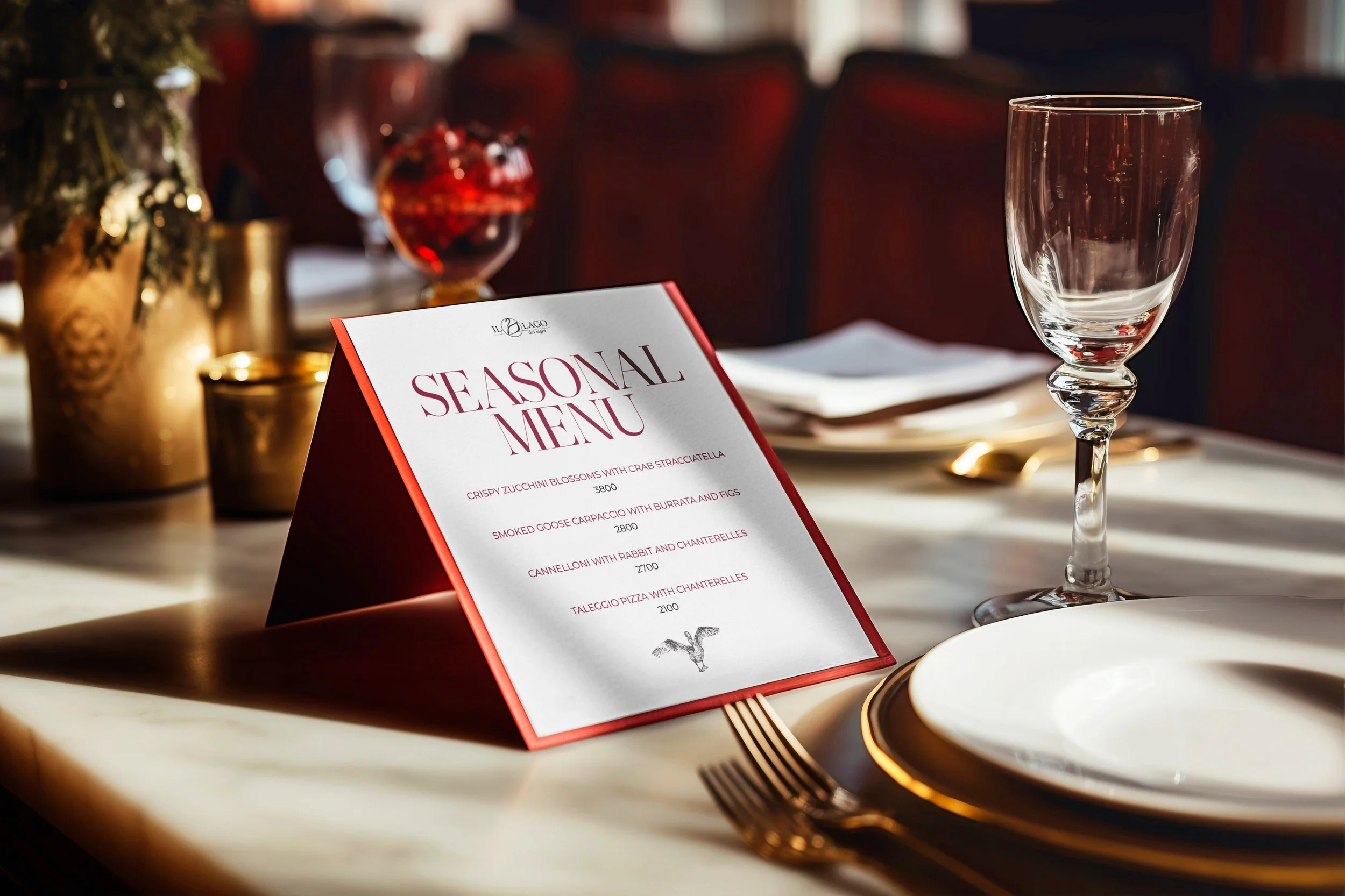
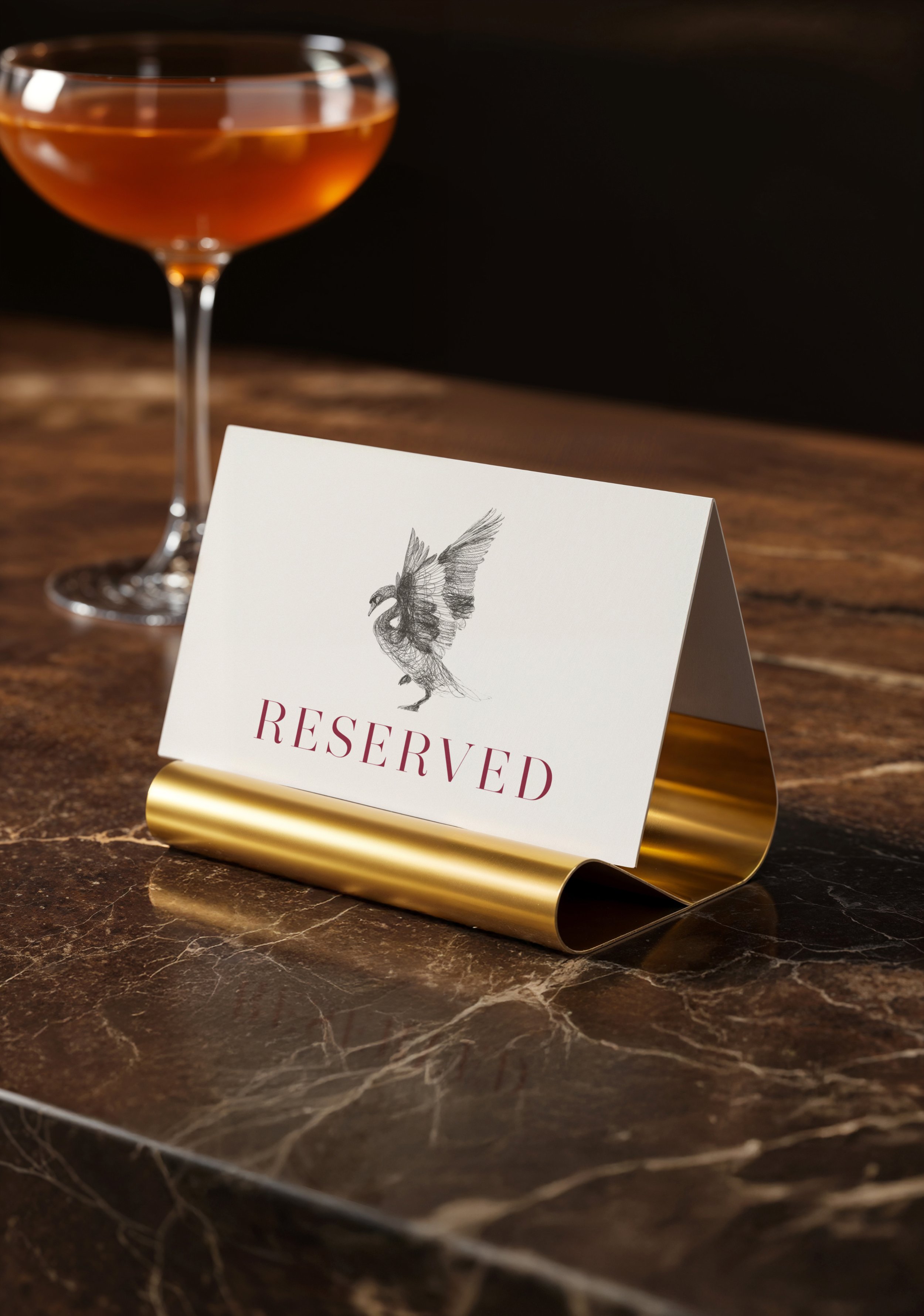
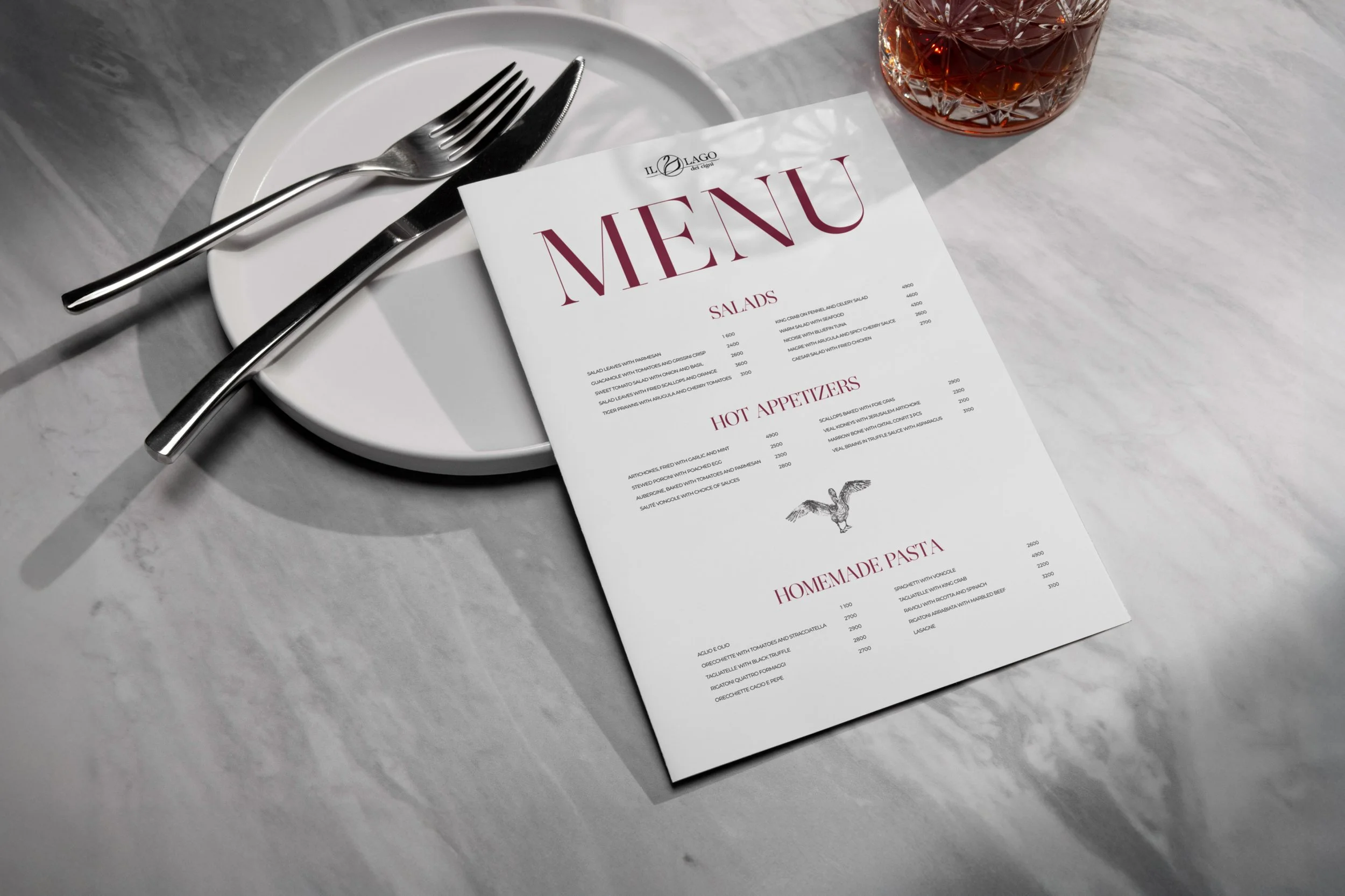
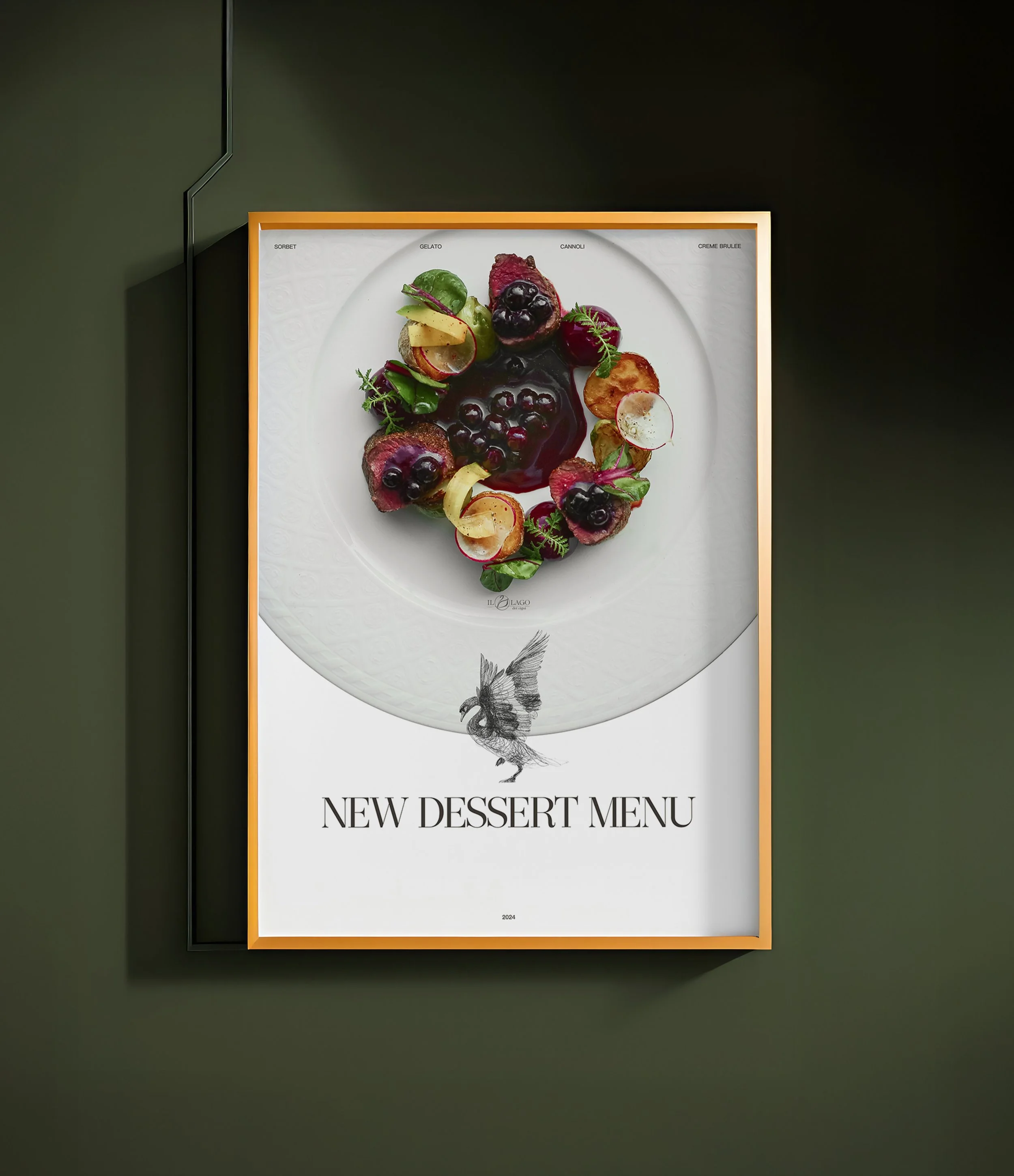
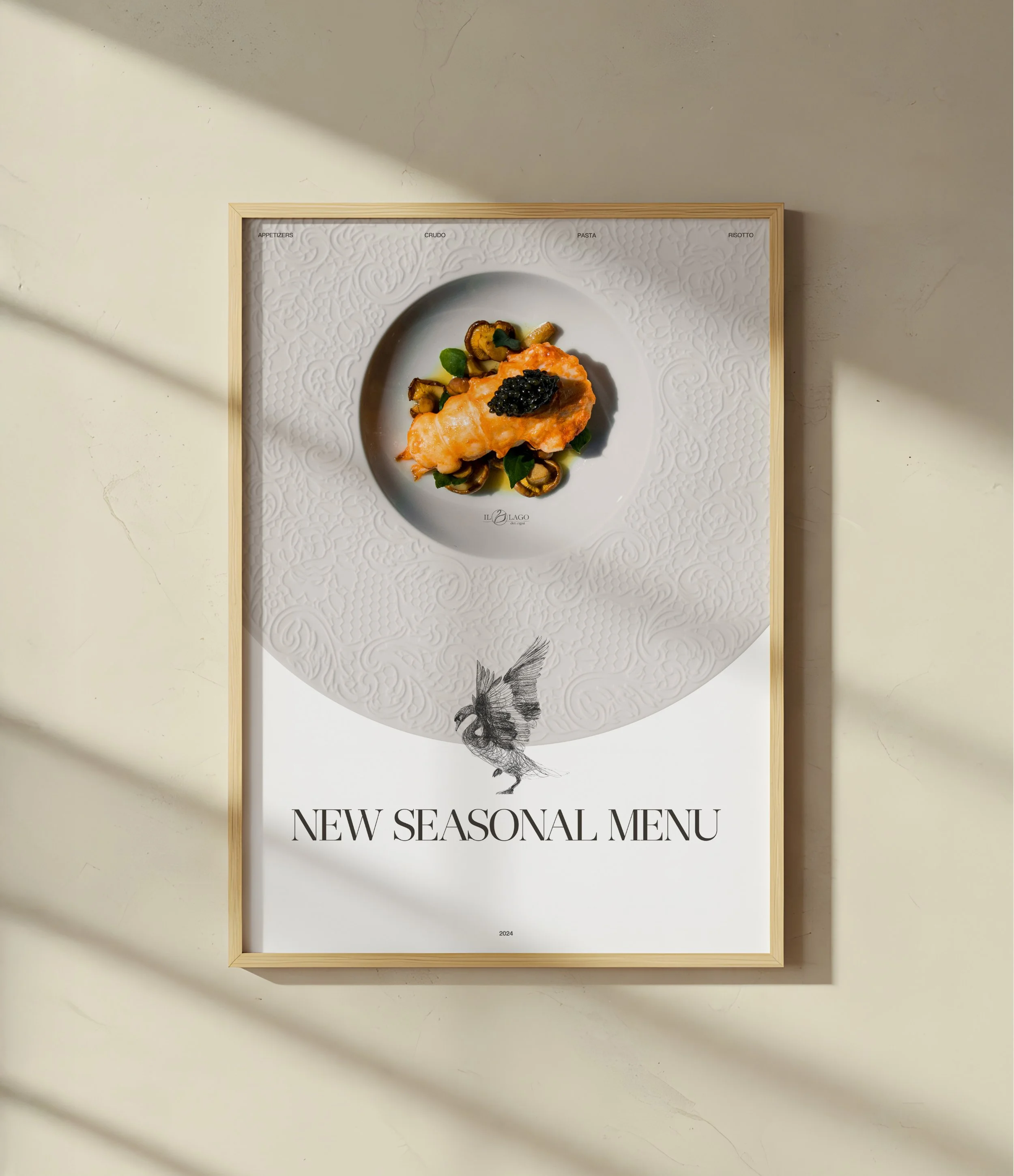
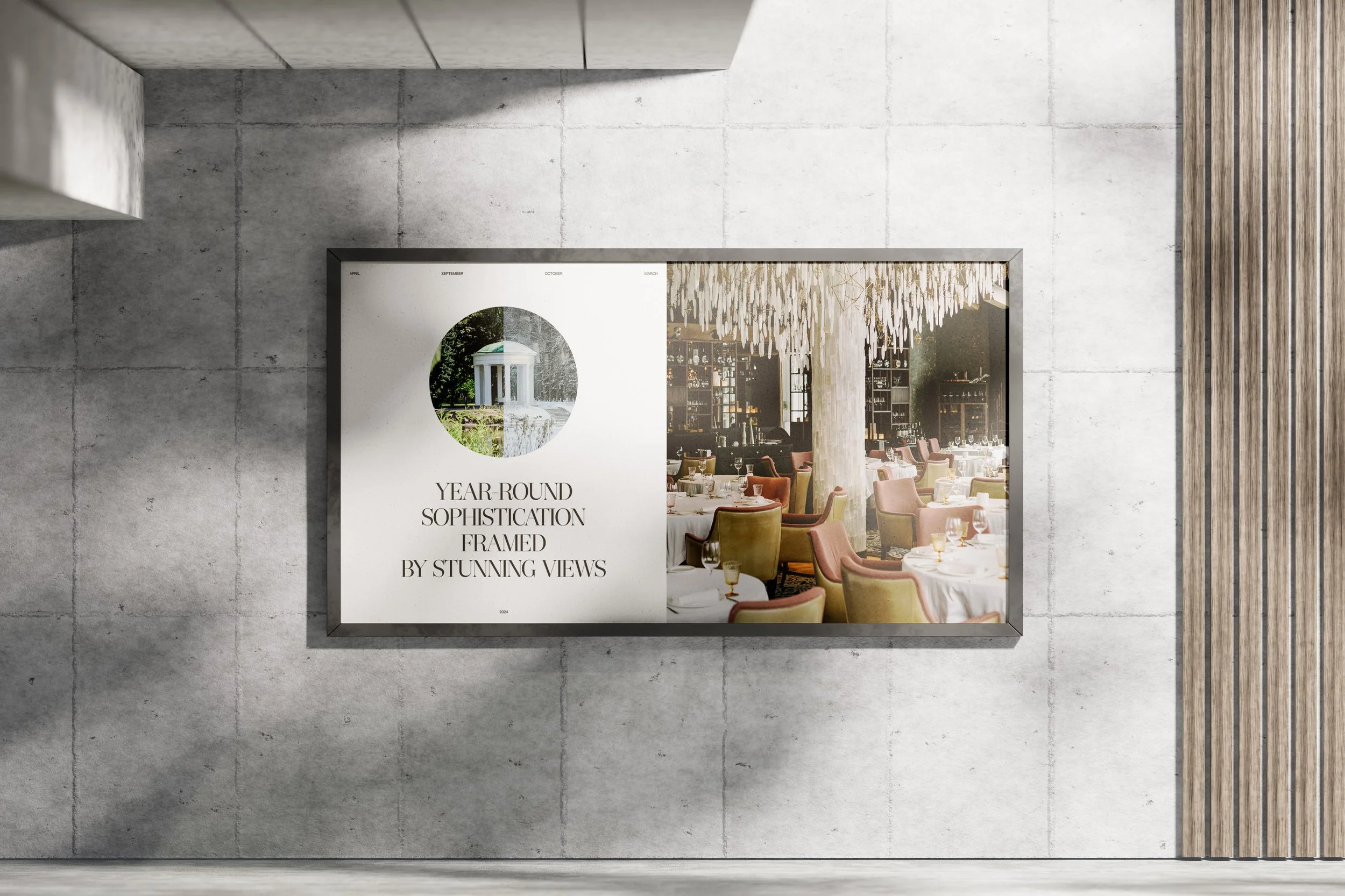
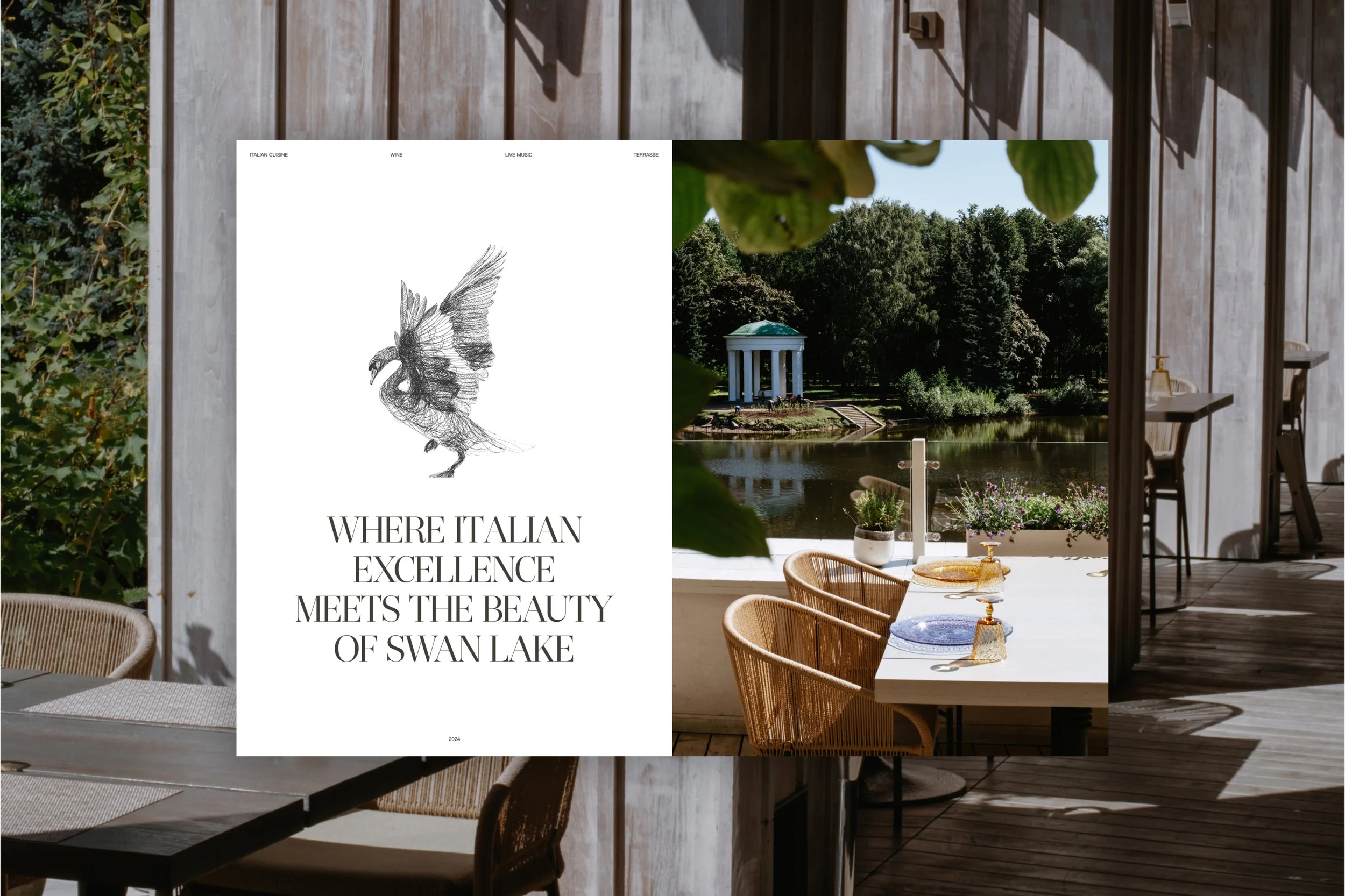
In addition to the website, I developed supporting brand and advertising materials. These materials helped extend the refreshed visual direction beyond the digital experience and create a more consistent brand presence across guest-facing communication.
The updated system could support seasonal offers, menu announcements, event communication, printed materials, and digital advertising. This was important because the restaurant’s communication does not happen only on the website: guests also encounter the brand through menus, social media, promotional materials, and offline touchpoints.
The result was a more complete and recognizable communication system, where the website became the central digital hub and other materials supported the same premium positioning.
Research Validation
After the website and refreshed communication system were introduced, audience feedback helped validate the direction. The research showed several positive changes in how guests interacted with the restaurant online.
Among loyal guests, the updated website increased trust because it made restaurant information easier to access and kept the brand experience consistent with the quality they already expected offline. Regular visitors could check the menu, updates, location details, and reservation options more easily.
Among new guests, the website reduced the barrier to first contact. The restaurant became easier to understand before visiting: users could see the atmosphere, explore the menu, understand the location, and book without needing to call or search for scattered information across different platforms.
The key research conclusion was that the website helped connect the restaurant’s premium offline reputation with a clearer and more convenient online experience.
Outcome
The final result was a new website and refreshed communication system for Il Lago dei Cigni. The project helped the restaurant present its philosophy, atmosphere, menu, location, interiors, terrace, team, and booking options in one coherent digital experience.
The website strengthened the restaurant’s online presence and made it easier for new guests to discover and understand the brand. It also improved the experience for loyal guests by giving them a clearer and more convenient way to access updated information and reserve a table.
The brand refresh made Il Lago’s visual communication more consistent across website, advertising materials, menus, and other touchpoints, helping the restaurant maintain a premium image in both digital and offline communication.
Business Value
The project helped Il Lago dei Cigni translate its offline strengths into a clear digital experience. The restaurant already had a strong reputation, but the website made that reputation easier to understand, trust, and act on.
For new guests, the website reduced uncertainty: it showed the atmosphere, menu, interiors, location, and reservation options in one place. For loyal guests, it made repeat interaction easier by providing a reliable online point for updated information and booking. For the business, it created a stronger digital foundation for advertising campaigns, seasonal communication, event promotion, and future growth.
The refreshed visual system also helped the restaurant stay relevant in a premium market where online perception strongly influences guest decisions. A more elegant and consistent digital presence supported the restaurant’s positioning, helped attract new guests, and reinforced trust among existing ones.
Conclusion
Il Lago dei Cigni demonstrates how website design and brand communication can support a premium hospitality business beyond visual presentation. The project was not only about creating a beautiful restaurant website, but about building a digital experience that helps guests understand the restaurant, feel its atmosphere, explore its offer, and make a reservation with confidence.
The work started with the restaurant’s strongest assets: location, cuisine, interiors, service, reputation, and emotional atmosphere. These qualities were translated into website structure, visual language, content hierarchy, reservation logic, and supporting brand materials.
As a result, the restaurant received a more coherent and premium online presence. The website helped turn interest into action, made the brand easier to discover, supported communication with loyal and new guests, and strengthened Il Lago’s position as one of Saint Petersburg’s leading fine dining restaurants.